Sun

Mon

Tue

Wed

Thu

Fri

Sat

Group Show

Babette’s Feast

Futures Gallery
Saturday 20 JuneSaturday 18 July

FUTURES is pleased to present Babette’s Feast, a group exhibition that gathers contemporary works of art that engage with the sacred beyond its original context – through objects, images, narratives and simulacra.

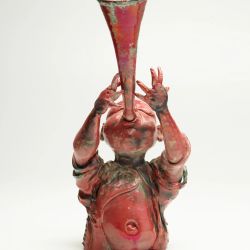
Spanning multiple mediums – from painting, works on paper, glass sculpture, photography – the exhibition traces how sacred imagery and symbolic forms continue to circulate through contemporary artistic practice. Rather than presenting the sacred as stable or intact, these works attend to the ways artists carry such forms into new contexts, engaging their sources and references through a myriad of approaches. Across the exhibition, spirits, saints, religious motifs, and idols emerge not as fixed categories, but as shifting forms of presence.

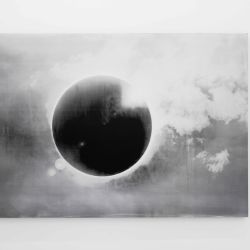
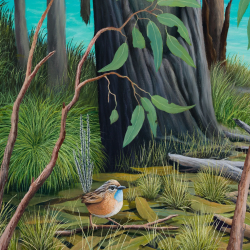
Andrew Browne’s painting of illuminated branches reflecting the light of a camera flash possesses an atmosphere infused with the possibility of the ghostly and spectral. The work recalls a Romantic disposition towards the landscape while drawing upon the visual language of Gothic imagery and the urban fringe.

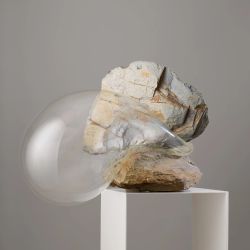
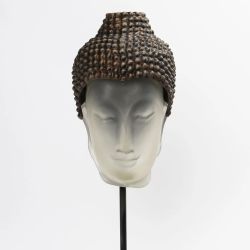
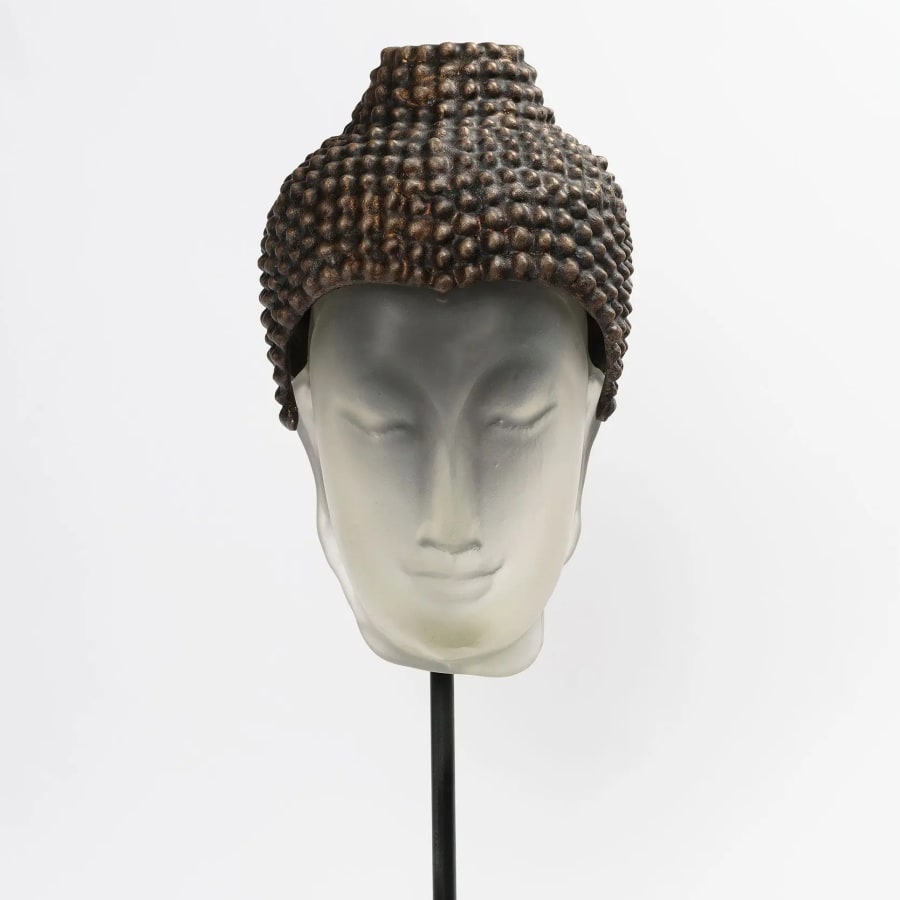
Nathan Beard’s blown glass sculptures also possess a ghostly allure. Made using 3D-printed moulds derived from scans of Thai objects held in museum collections, the works trace the shifting life of objects as they move between devotion, commerce, and display. Ros Kamolros’s photograph of a shrine to the ghost Nang Nak is constructed through reflections in the shrine's mirrors, capturing transient encounters between the visible and invisible realms

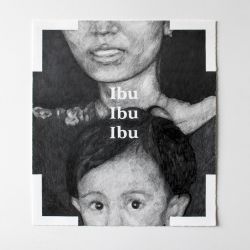
Imagery in Matilda Davis’s lyrical gouache work on paper cascades across a scroll-like surface. Retelling the story of the folk Saint of Guinefort, the work is populated by saintly dogs, snakes, and an infant saved from peril. Sophie Greig’s painting offers a reimagining of the Eucharist, replacing the body of Christ with the Venus of Willendorf, the ‘great mother’ trope. The female protagonist is perhaps about to consume the Venus to absorb some of her power, or to destroy her and prevent giving her own body up for the demands of reproduction.

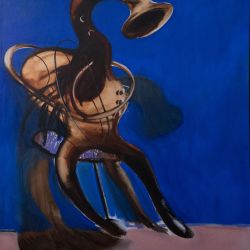
Benjamin Bannan is interested in what a Saint Sebastian for our time could mean, moving him beyond a particular version of gay identity. The emoji arrow is also a visual symbol used for organising bodies and identities, and the process of carbon-copying and working these disparate images together generates new ways of seeing. In Drew Connor Holland’s work, the logic of the simulacrum is taken further through what he describes as ‘speculative archaeologies'. Sourcing imagery from the internet and subjecting it to processes of digital and analogue degradation, Holland creates works that evoke crumbling frescoes and general wear and tear, occupying a space between antiquity and contemporary technology.

Drew Connor Holland appears courtesy of Nasha Gallery, Sydney

Andrew Browne appears courtesy of Tolarno Galleries, Melbourne

Location

Futures Gallery
19 Easey Street, Collingwood VIC 3066, Australia

Date

Saturday 20 JuneSaturday 18 July

Save to Calendar

All exhibition content on this website has been sourced from the exhibiting gallery’s website or provided by other art enthusiasts. We do not own or seek to own any of this material. If you are concerned about any misuse of your content, please let us know here.

Suggest a change

Suggest an edit or change to this exhibition

Exhibition information

Personal information

Group Show

Babette’s Feast

Futures Gallery
Saturday 20 JuneSaturday 18 July

FUTURES is pleased to present Babette’s Feast, a group exhibition that gathers contemporary works of art that engage with the sacred beyond its original context – through objects, images, narratives and simulacra.

Spanning multiple mediums – from painting, works on paper, glass sculpture, photography – the exhibition traces how sacred imagery and symbolic forms continue to circulate through contemporary artistic practice. Rather than presenting the sacred as stable or intact, these works attend to the ways artists carry such forms into new contexts, engaging their sources and references through a myriad of approaches. Across the exhibition, spirits, saints, religious motifs, and idols emerge not as fixed categories, but as shifting forms of presence.

Andrew Browne’s painting of illuminated branches reflecting the light of a camera flash possesses an atmosphere infused with the possibility of the ghostly and spectral. The work recalls a Romantic disposition towards the landscape while drawing upon the visual language of Gothic imagery and the urban fringe.

Nathan Beard’s blown glass sculptures also possess a ghostly allure. Made using 3D-printed moulds derived from scans of Thai objects held in museum collections, the works trace the shifting life of objects as they move between devotion, commerce, and display. Ros Kamolros’s photograph of a shrine to the ghost Nang Nak is constructed through reflections in the shrine's mirrors, capturing transient encounters between the visible and invisible realms

Imagery in Matilda Davis’s lyrical gouache work on paper cascades across a scroll-like surface. Retelling the story of the folk Saint of Guinefort, the work is populated by saintly dogs, snakes, and an infant saved from peril. Sophie Greig’s painting offers a reimagining of the Eucharist, replacing the body of Christ with the Venus of Willendorf, the ‘great mother’ trope. The female protagonist is perhaps about to consume the Venus to absorb some of her power, or to destroy her and prevent giving her own body up for the demands of reproduction.

Benjamin Bannan is interested in what a Saint Sebastian for our time could mean, moving him beyond a particular version of gay identity. The emoji arrow is also a visual symbol used for organising bodies and identities, and the process of carbon-copying and working these disparate images together generates new ways of seeing. In Drew Connor Holland’s work, the logic of the simulacrum is taken further through what he describes as ‘speculative archaeologies'. Sourcing imagery from the internet and subjecting it to processes of digital and analogue degradation, Holland creates works that evoke crumbling frescoes and general wear and tear, occupying a space between antiquity and contemporary technology.

Drew Connor Holland appears courtesy of Nasha Gallery, Sydney

Andrew Browne appears courtesy of Tolarno Galleries, Melbourne

Location

Futures Gallery
19 Easey Street, Collingwood VIC 3066, Australia

Date

Saturday 20 JuneSaturday 18 July

Save to Calendar

All exhibition content on this website has been sourced from the exhibiting gallery’s website or provided by other art enthusiasts. We do not own or seek to own any of this material. If you are concerned about any misuse of your content, please let us know here.

Suggest a change

Suggest an edit or change to this exhibition

Exhibition information

Personal information